
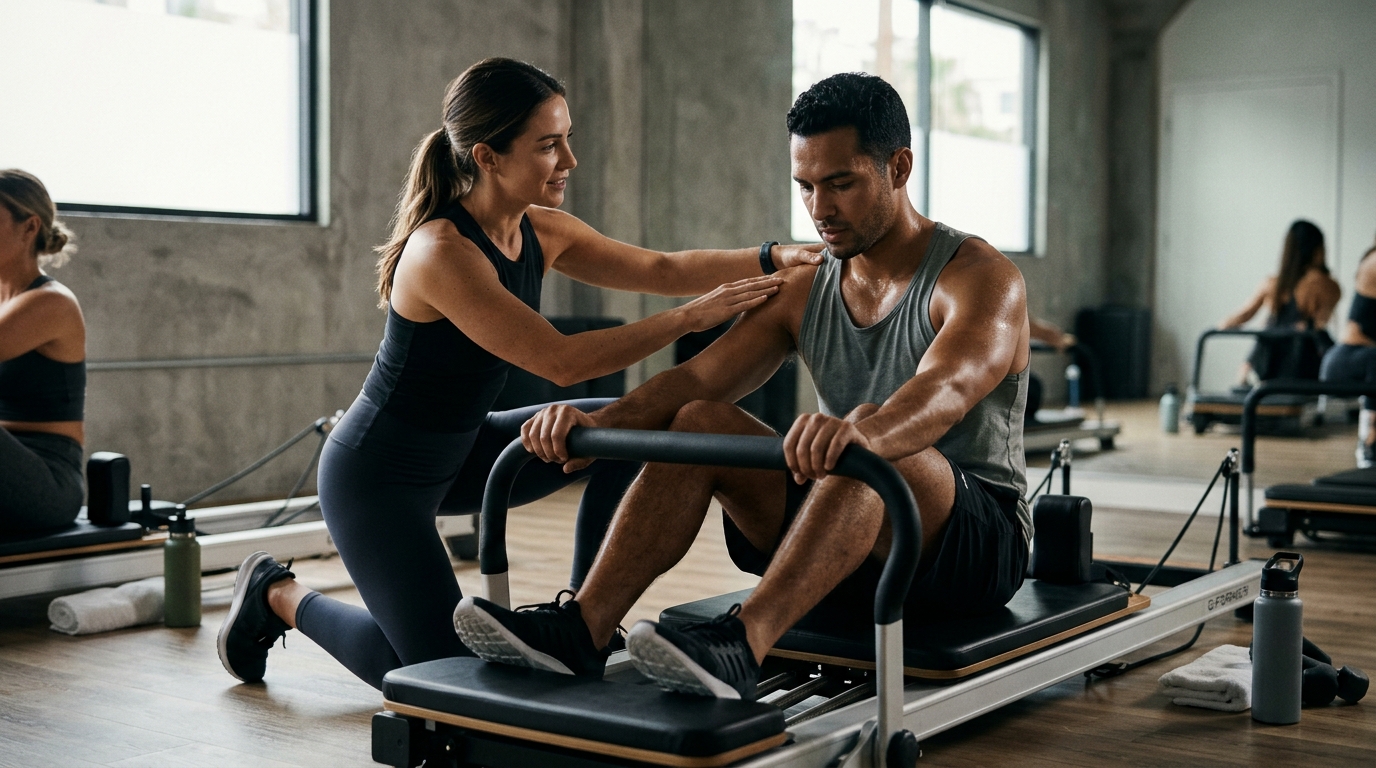
In boutique fitness studios, instructors provide personalized form corrections through close visual observation, verbal cues, and hands-on adjustments. This direct attention ensures that every movement aligns with proper biomechanics and safety standards. At G:50 Studio in West Hollywood, this philosophy drives our coaching model. We focus on intelligent progression and precise alignment to help you work harder and safer. For additional details, review the g50studio com.
The Role of Visual Observation in Coaching
Effective coaching begins with the eye. Instructors in small-group settings can monitor multiple clients simultaneously without losing focus on individual details. This visual scanning allows them to identify subtle deviations in posture or range of motion before they become problematic. For example, a coach might notice a client’s shoulders rising toward the ears during a rowing movement. This specific observation triggers an immediate verbal cue to lower the shoulders and engage the upper back. This level of detail is difficult to achieve in large commercial gyms where the instructor-to-client ratio is much higher. For additional details, review the Frequently Asked Questions.
Visual observation is not just about spotting errors. It is about recognizing when a client is ready to progress. When an instructor sees consistent, controlled movement, they can introduce the next level of resistance or complexity. This dynamic assessment ensures that the workout remains challenging but never unsafe. The coach acts as a real-time quality control system for your movement patterns. For additional details, review the About.
Verbal Cues and Kinesthetic Feedback
Kinesthetic feedback involves the instructor using light touch to guide the body into the correct position. This is often called “hands-on” coaching. For instance, during a core exercise, a coach might place a hand on the client’s lower back to ensure the pelvis remains stable. This physical cue bypasses the cognitive load of understanding complex anatomy. It provides immediate sensory information that helps the client feel the correct muscle engagement. This method is particularly effective for clients who are new to a specific movement pattern.
Modifications for Different Fitness Levels
Personalization extends beyond correcting form to adapting the workout itself. Modifications allow clients of varying fitness levels to participate in the same class while working at their appropriate intensity. A modification might involve changing the range of motion, reducing the weight, or altering the tempo of the movement. For example, a client who is new to boxing might perform punches at a slower pace with less rotation, while an advanced client performs the same combination at full speed and power. This ensures that everyone is challenged without being overwhelmed.
The Importance of Intelligent Progression
Progression is the logical next step after mastering form. Intelligent progression means increasing the difficulty of a workout in a structured and safe manner. This can involve adding more resistance, increasing the number of repetitions, or shortening rest periods. The goal is to stimulate adaptation without causing injury or burnout. Coaches track client progress over time to determine when it is appropriate to advance. This data-driven approach ensures that clients are often working at the edge of their ability, which is where the most significant gains occur.
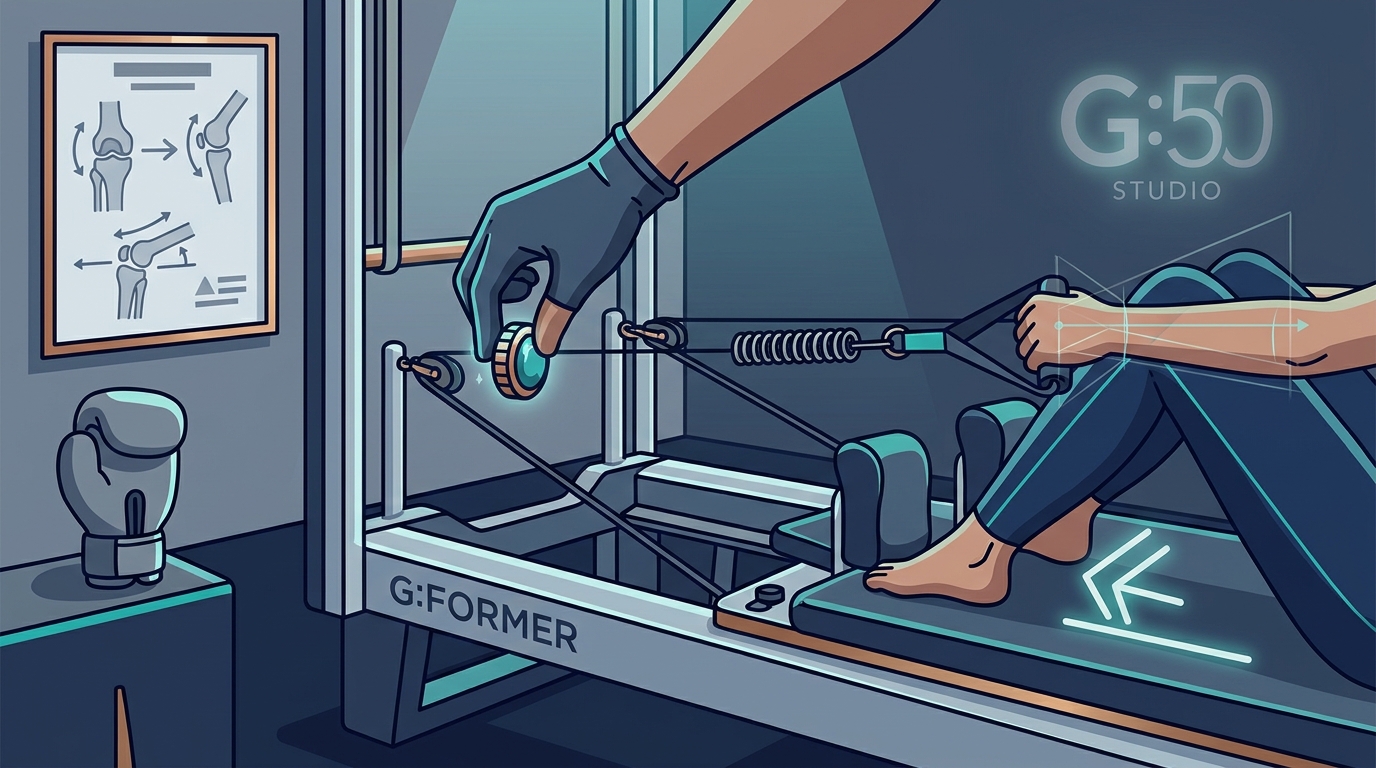
For instance, in our HIIP classes, progression might mean moving from a lighter spring setting on the G:FORMER to a heavier one. The coach monitors the client’s ability to maintain control under the increased load. If the form breaks down, the coach will adjust the resistance back down. This feedback loop ensures that intensity is always matched to capability. It is a sophisticated method of training that requires experienced and attentive coaching.
Building Trust Through Consistent Coaching
Consistency in coaching builds trust between the instructor and the client. When clients know that their form will be corrected and their progress will be monitored, they feel safer and more confident. This trust allows them to push harder and take on new challenges. It also creates a sense of community and accountability. Clients are more likely to return to a studio where they feel seen and supported. This emotional connection is a significant factor in long-term adherence to a fitness routine.
At G:50 Studio, we prioritize this relationship. Our coaches remember client preferences, limitations, and goals. This personal touch transforms a workout into a personalized experience. It is not just about burning calories; it is about building strength, confidence, and competence. This holistic approach to coaching is what sets boutique fitness apart from other fitness options.
Key Takeaways
- Visual observation allows instructors to detect subtle form errors in real time.
- Verbal cues provide concise, actionable instructions that are easy to process during exercise.
- Modifications enable clients of different fitness levels to train together safely.
- Intelligent progression ensures that workouts remain challenging and effective over time.
- Consistent, personalized coaching builds trust and encourages long-term adherence.
Frequently Asked Questions
How do instructors know when to correct my form?
Instructors use visual observation to monitor movement patterns. They look for deviations from proper alignment, such as rounded shoulders or unstable hips. When they spot an error, they provide a verbal cue or a light touch adjustment to guide you back to the correct position.
What is a modification in a fitness class?
A modification is an adjustment to an exercise to make it easier or harder. It might involve changing the range of motion, reducing the weight, or altering the tempo. Modifications allow clients of different fitness levels to participate in the same class while working at their appropriate intensity.
Do boutique studios offer personal training?
How does hands-on coaching work?
Hands-on coaching involves the instructor using light touch to guide your body into the correct position. This provides immediate sensory feedback that helps you feel the correct muscle engagement. It is a common technique in Pilates and boxing classes to ensure proper form and safety.
Why is intelligent progression important?
Intelligent progression ensures that your workouts become more challenging over time in a safe and structured way. It involves increasing resistance, repetitions, or intensity based on your current capabilities. This approach helps you continue to make progress without risking injury or burnout.
How can I find a studio with good coaching?
Look for studios with a low instructor-to-client ratio and a focus on technique. Read reviews that mention specific coaching behaviors, such as form corrections and modifications. Visiting a studio for a trial class can also give you a sense of the coaching style and atmosphere.
Experience Personalized Coaching at G:50 Studio
At G:50 Studio, we believe that a workout should be challenging, effective, and properly coached. Our instructors are dedicated to providing the personalized attention you need to succeed. Whether you are new to fitness or an experienced athlete, we will help you find the right level of intensity and form. Come ready to work, shake, sweat, and leave stronger than you walked in. Visit G:50 Studio to learn more about our classes and coaching philosophy. Learn more: g50studio com.