
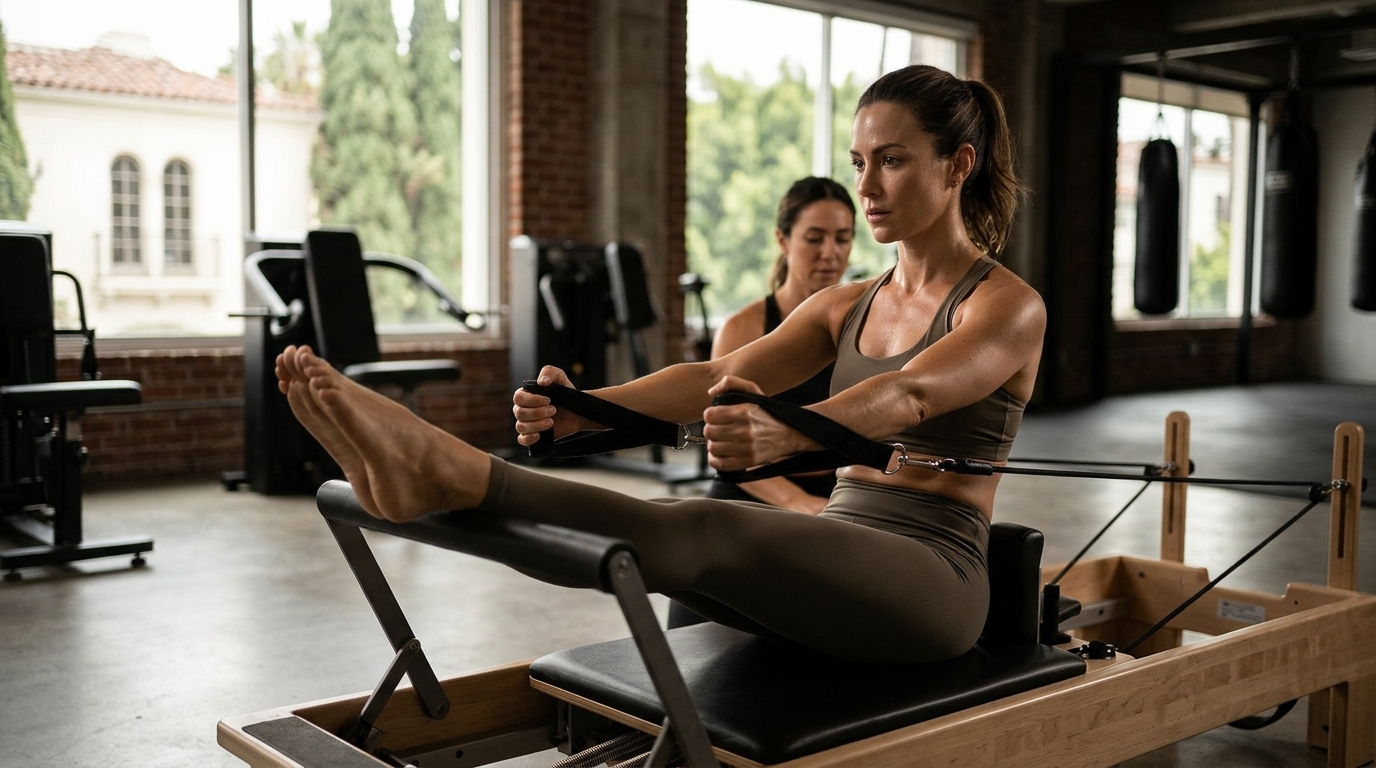
Low-impact strength training builds measurable muscle, improves bone density, and enhances functional mobility over time. At G:50 Studio in West Hollywood, we focus on controlled, high-resistance movements that yield consistent physiological adaptations without joint stress. You can expect steady strength gains, improved body composition, and better daily function when you commit to a structured program. For additional details, review the g50studio com.
The Physiology of Low-Impact Adaptation
Low-impact strength training is a method of resistance exercise that minimizes joint loading while maximizing muscular tension. This approach allows the body to adapt to stress without the repetitive impact forces associated with running or jumping. The primary mechanism is mechanical tension, which stimulates muscle protein synthesis and neural adaptations. For additional details, review the Customer Experience.
Research indicates that ten weeks of resistance training can increase lean weight by 1.4 kg and reduce fat weight by 1.8 kg, according to a study indexed by PubMed. These changes are not immediate but accumulate over months. For clients at G:50 Studio, this means that the slow, controlled movements on our G:FORMER machines are designed to create this specific mechanical tension. The goal is not just to move weight, but to force the muscle to work under load for extended periods. For additional details, review the Frequently Asked Questions.
Strength Gains vs. Hypertrophy
Many clients ask if they need to lift heavy weights to get strong. The evidence suggests otherwise. A systematic review and meta-analysis found that strength and hypertrophy adaptations can occur with both low-load and high-load resistance training, provided the effort is sufficient, as noted in Journal of Strength and Conditioning Research. The key variable is the level of effort, not just the weight on the bar. For additional details, review the About.
In a low-impact environment, you can achieve near-maximal muscle activation with lighter loads by controlling the tempo and range of motion. This is the core of the HIIP (High-Intensity Interval Pilates) experience at G:50 Studio. By using custom-built resistance machines, we allow you to push to true muscular failure safely. The implication is that you do not need to slam weights or jump to build significant strength. You need intelligent progression and consistent effort.
Bone Health and Longevity
Bone density is a critical factor in long-term health, particularly for older adults. Strength training seems to be the only therapeutic intervention that can lessen the declines in strength and power seen in the older adult, according to research published in PMC. This is vital because bone loss accelerates with age and menopause.
Functional Mobility and Balance
Functional mobility is the ability to move through daily tasks with ease and stability. Low-impact resistance exercise programs have been shown to increase strength and balance in females irrespective of menopause status, according to a study in PubMed. This is a crucial distinction. Many high-impact programs improve cardio but neglect the stabilizing muscles required for balance.
At G:50 Studio, our coaching focuses on proper form, alignment, and control. This ensures that the muscles supporting your joints are strong and responsive. The implication is that you will feel more stable in your daily life. Whether you are climbing stairs, carrying groceries, or playing with children, the functional strength gained from low-impact training translates directly to real-world performance. You will move with more confidence and less fear of injury.
Consistency and Progressive Overload
Progressive overload is the principle of gradually increasing the demands on your musculoskeletal system. Without it, your body adapts to the current stimulus and stops changing. In low-impact training, progression can come from increased resistance, slower tempos, or reduced rest periods. A study on cluster training and traditional resistance training highlights that long-term consistency is key to enhancing maximum strength in young adults, as reviewed in PMC.
The realistic expectation is that progress is non-linear. You will have weeks where you feel strong and weeks where you feel challenged. The key is to show up. At G:50 Studio, our coaches track your progress and adjust your programming accordingly. We do not guess; we measure. This data-driven approach ensures that you are always working at the right level. The result is a sustainable training habit that yields compounding benefits over years, not just weeks.
Key Takeaways
- Low-impact strength training builds muscle and bone density without joint stress.
- Strength gains depend on effort and control, not just heavy weights.
- Consistent training can improve lean mass and reduce fat mass over ten weeks.
- Functional mobility and balance improve significantly with targeted resistance work.
- Progressive overload is essential for long-term adaptation and strength gains.
- Coached programs ensure safe progression and proper form.
- Results are cumulative and require consistent effort over months.
Frequently Asked Questions
How long does it take to see results from low-impact strength training?
Most clients notice improved strength and endurance within 4 to 6 weeks. Significant changes in body composition and bone density typically take 3 to 6 months of consistent training.
Is low-impact training effective for building muscle?
Yes. Research shows that low-load resistance training can produce similar hypertrophy and strength gains as high-load training when performed with high effort and proper control. according to Strength and Hypertrophy
Can I do low-impact training if I have joint pain?
Low-impact training is often recommended for individuals with joint issues because it minimizes repetitive stress. However, you should consult a medical professional before starting any new exercise program.
What is the difference between HIIP and traditional Pilates?
Do I need to lift heavy weights to get strong?
No. You can build significant strength with lighter weights if you control the movement and push to muscular failure. The key is the level of effort, not the absolute weight.
How often should I train for long-term results?
Training 2 to 3 times per week is generally sufficient for most adults to see consistent progress. More frequent training may be beneficial for advanced athletes but requires adequate recovery.
Start Your Journey at G:50 Studio
At G:50 Studio, we are committed to helping you achieve realistic, sustainable results. Our coaches are trained to guide you through the process of progressive overload and proper form. Whether you are new to strength training or looking to refine your technique, we have a program for you. Visit our homepage to learn more about our classes and schedule your first session. Learn more: g50studio com.